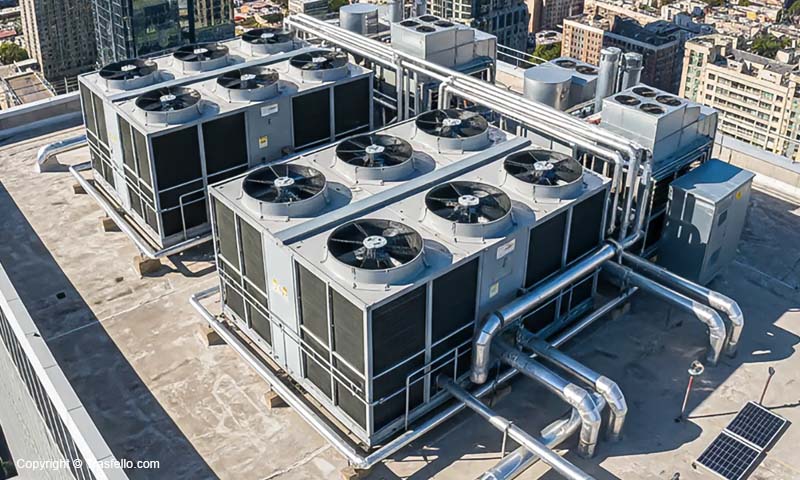
Trasfello.com – Control instrumentation plays a critical role in modern industrial environments by enabling precise measurement, monitoring, and regulation of process variables such as temperature, pressure, flow, and level. These systems combine sensors, transmitters, controllers, and actuators to maintain optimal operating conditions, ensuring safety, quality, and regulatory compliance. By integrating advanced control instrumentation, industries reduce waste, improve efficiency, and secure operational reliability.
This article explores seven essential solutions that exemplify the power of control instrumentation in driving industrial transformation.
Sensors and Transmitters
At the core of every control instrumentation setup are sensors and transmitters. These components continuously detect and measure physical variables including temperature (via thermocouples), pressure (using piezoelectric transducers), flow (ultrasonic or electromagnetic), and level (radar or ultrasonic sensors). High-precision sensors provide data with accuracy levels often as tight as 0.1%, which is crucial for maintaining consistent process conditions.
Robust construction allows these devices to operate reliably in harsh environments characterized by extreme temperatures, corrosive atmospheres, or high vibrations, thereby ensuring uninterrupted input for the control system.
Read Also : Reliable Electrical Control Solutions for Modern Industries
Programmable Logic Controllers
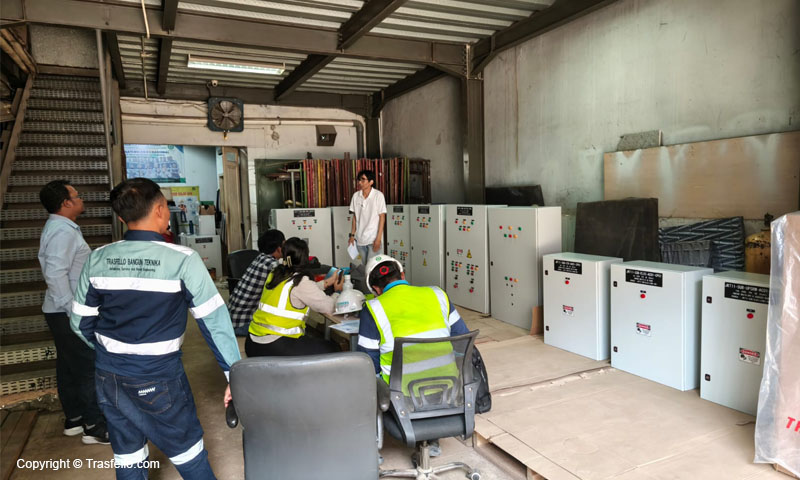
Programmable Logic Controllers (PLCs) form the processing heart of control instrumentation systems. By receiving inputs from sensors and executing complex control algorithms, PLCs generate output commands to actuators to regulate process conditions precisely. Their ability to rapidly process thousands of inputs and outputs with scan times under one millisecond makes them indispensable in industries requiring real-time control.
These controllers support modular expansion and robust redundancy to maintain system availability, particularly in critical continuous process applications.
Distributed Control Systems
Distributed Control Systems (DCS) offer scalable and resilient platforms for managing vast networks of control loops distributed across large industrial sites. Unlike centralized PLC systems, in a DCS control intelligence is spread through multiple field controllers closer to the measured processes, increasing reliability and fault tolerance. Centralized operator workstations provide comprehensive visualization, alarming, and data logging capabilities.
DCS platforms are preferred in industries such as petrochemicals, refining, and power generation, where multivariable control, batch sequencing, and advanced optimization are vital.
Read Also : 7 Powerful Electrical Automation Solutions You Must Know
Human-Machine Interfaces
Human-Machine Interfaces (HMIs) convert control instrumentation data into meaningful visualizations for operators and engineers. These devices and software provide real-time process status, historical trends, alarm notifications, and control inputs, typically via touchscreen displays. Modern HMIs incorporate web access for remote monitoring from mobile devices, enhancing operational flexibility.
By simplifying complex process data, HMIs empower faster response to deviations and support seamless production continuity.
Actuators and Final Control Elements
Actuators and final control elements translate control signals into physical actions that adjust the process. Control valves, electric motors, pneumatic cylinders, and variable frequency drives regulate material flow, pressure, speed, or positioning with high precision. Sophisticated positioners integrated with digital communication protocols enable accurate valve travel monitoring and diagnostics.
Properly functioning actuators are essential for maintaining stable process dynamics and consistent product quality.
Supervisory Control and Data Acquisition Systems
Supervisory Control and Data Acquisition (SCADA) systems extend control instrumentation capabilities by aggregating data across distributed assets for centralized supervision and control. SCADA integrates with PLCs and DCS to provide operator dashboards, alarm management, trending, and automated report generation. OPC UA and other industrial protocols ensure interoperability with enterprise business systems.
These platforms enable real-time decision-making and rapid response across geographically dispersed sites.
Read Also : Discover the Power of Electrical Instrumentation in Industry Today
Advanced Process Control and Analytics
Advanced Process Control (APC) overlays mathematical models and predictive algorithms onto control instrumentation systems to optimize performance beyond standard PID control. APC anticipates process disturbances, adjusts setpoints proactively, and manages nonlinear dynamics, leading to yield improvements and energy savings. Data analytics and machine learning integrated with control instrumentation enable predictive maintenance and continuous improvement.
Companies implementing APC often achieve 3-5% improvements in throughput and substantial reductions in process variability.
Industrial Applications of Control Instrumentation
Control instrumentation systems are vital across many industries including:
- Oil & Gas: Regulating drilling pressures, monitoring refinery reactors, managing pipeline flows.
- Power Generation: Controlling boiler steam conditions, turbine speeds, grid synchronization.
- Pharmaceuticals: Maintaining sterile environments, batch control, ingredient dosing accuracy.
- Water & Wastewater: Chemical dosing, filtration efficiency, discharge quality monitoring.
- Food & Beverage: Pasteurization control, filling processes, contamination detection.
Components and Industrial Roles
| Component | Role | Example Applications |
|---|---|---|
| Sensors & Transmitters | Measure critical process parameters | Temperature, Pressure, Flow |
| Programmable Logic Controllers | Control logic execution | Batch chemical production |
| Distributed Control Systems | Distributed regulation and monitoring | Oil refineries, power plants |
| Human-Machine Interfaces | Visualization and user control | Control rooms, mobile access |
| Actuators & Positioners | Physical process adjustments | Valve control, motor speed regulation |
| SCADA Systems | Centralized supervisory control | Utility networks, manufacturing plants |
| Advanced Process Control | Predictive process optimization | Refining, pharmaceuticals |
Why Trasfello for Your Control Instrumentation Needs
Trasfello offers tailored, comprehensive control instrumentation solutions, including system design, installation, commissioning, and lifecycle support. Their expertise covers PLC and DCS integration, safety instrumentation, and Industry 4.0 digital transformation projects. Trasfello’s end-to-end approach ensures maximum process reliability, safety, and return on investment.
Control instrumentation constitutes the nervous system of industrial automation, enabling precise control that supports quality, safety, and efficiency goals. Leveraging these seven solutions in partnership with a trusted provider like Trasfello prepares facilities to excel in competitive, technology-driven markets.